



If you run an online store, you already know the frustrating part of ecommerce. Traffic comes in, people browse, they add products to their cart, and then... nothing. They leave without buying. This is exactly why learning how to increase ecommerce conversion rates matters more than almost anything else in your business.
The truth is, getting visitors to your website is only half the battle. The real challenge is turning those visitors into paying customers. A store that converts even 1% better can mean thousands of dollars in extra revenue every month, without spending a single extra dollar on ads.
In this guide, we will walk through practical, real-world strategies that actually move the needle. No fluff, no generic advice you have read a hundred times before. Just the things that genuinely help online stores sell more.
What Is Ecommerce Conversion Rate and Why It Matters
Your conversion rate is simply the percentage of visitors who complete a desired action on your website, usually making a purchase. If 1,000 people visit your store and 20 of them buy something, your conversion rate is 2%.
According to industry benchmarks tracked by Statista, average ecommerce conversion rates typically hover between 2% and 3% globally. That might sound low, but it also means there is massive room for improvement if your store is underperforming.
Here is why this number deserves your full attention:
- It directly affects your revenue without needing more traffic
- It shows how well your website builds trust with visitors
- It reveals gaps in your user experience and checkout process
- It helps you spend your marketing budget more efficiently
A high-converting store does not happen by accident. It is the result of smart design decisions, fast performance, and a checkout process that respects the customer's time.
Common Reasons Ecommerce Stores Lose Sales
Before jumping into solutions, it helps to understand where things typically go wrong. Most stores lose potential customers at a few predictable points.
Slow Website Loading Speed
Nobody likes waiting. If your product pages take more than three seconds to load, a large chunk of your visitors will simply leave. Google itself has confirmed that page speed is a ranking factor and a major driver of user experience, as noted in Google's web performance research.
Confusing or Cluttered Design
When a visitor lands on your homepage and cannot figure out where to click next, they get frustrated fast. Cluttered layouts, unclear navigation, and inconsistent branding all chip away at trust.
Complicated Checkout Process
This is one of the biggest conversion killers in ecommerce. If customers have to create an account, fill out ten fields, or go through five steps just to check out, many will abandon their cart halfway through.
Lack of Trust Signals
Shoppers today are cautious. Without visible security badges, clear return policies, and genuine reviews, many visitors simply do not feel safe entering their payment details.
Poor Mobile Experience
More than half of ecommerce traffic now comes from mobile devices. If your site is not properly optimized for smaller screens, you are losing sales every single day.
Proven Strategies to Increase Ecommerce Conversion Rates
Now let's get into the practical part. These are strategies that genuinely work when implemented correctly.
1. Optimize Your Website Design and User Experience
Your website is your digital storefront. If it looks outdated, loads slowly, or feels hard to navigate, visitors will not stick around long enough to buy anything.
A well-designed store should:
- Use clear, easy-to-read fonts and consistent color schemes
- Have an intuitive navigation menu that guides shoppers naturally
- Highlight bestsellers and promotions on the homepage
- Include high-quality product images from multiple angles
- Feature a clean, distraction-free checkout page
This is where professional web design and development makes a real difference. A custom-built website designed around your specific products and audience will always outperform a generic template. If your current store feels like it is holding you back, working with a team that specializes in ecommerce website development can help you build something that actually converts, rather than just looks nice.
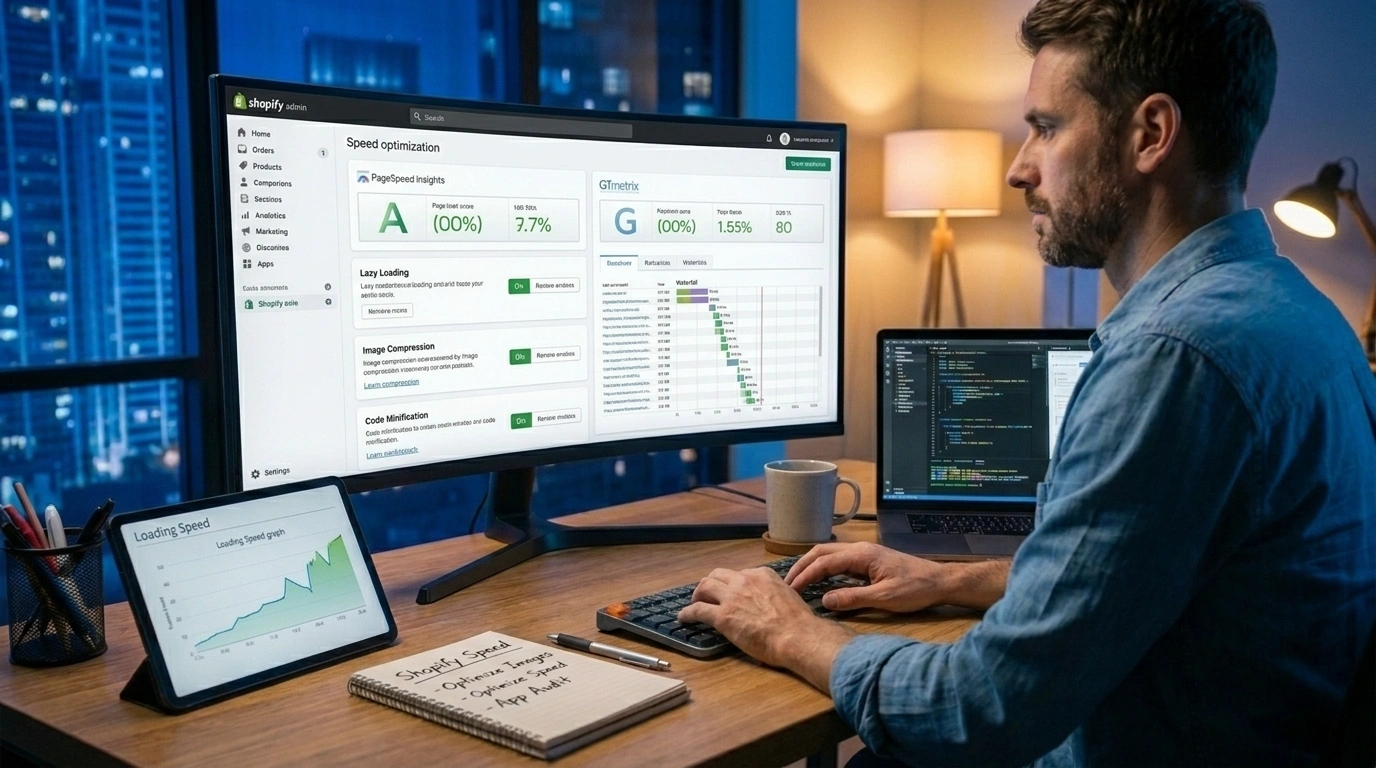
2. Improve Website Speed and Performance
Speed is not just a technical detail, it directly impacts your bottom line. Studies consistently show that even a one-second delay in page load time can reduce conversions significantly.
To improve speed:
- Compress and optimize all product images
- Use a reliable hosting provider built for ecommerce traffic
- Minimize unnecessary plugins and scripts
- Enable browser caching and use a content delivery network
If you are running your store on Shopify, choosing the right theme and app combination matters a lot. A poorly coded Shopify theme can slow your entire store down, no matter how good your products are. Investing in proper Shopify website development ensures your store is built for speed from the ground up, not patched together with too many third-party apps.
3. Simplify Your Checkout Process
Cart abandonment is one of the most common problems in ecommerce, and the checkout process is usually the biggest culprit. According to research from the Baymard Institute, the average cart abandonment rate across industries is around 70%.
Here is how to fix it:
- Offer guest checkout, do not force account creation
- Reduce the number of form fields to only what is necessary
- Show a progress indicator during multi-step checkout
- Display shipping costs early, not as a surprise at the last step
- Offer multiple payment options including digital wallets
Even small tweaks here can lead to a noticeable jump in completed orders. Sometimes the issue is not your product or price, it is simply friction in the process.
4. Build Trust With Social Proof and Security
People buy from brands they trust. Without trust signals, even the best products will struggle to convert visitors into buyers.
Ways to build trust on your store:
- Display genuine customer reviews and ratings on product pages
- Add trust badges near your payment and checkout sections
- Show clear return and refund policies upfront
- Include real customer photos or testimonials where possible
- Make your contact information easy to find
Transparency builds confidence, and confidence leads to sales.
5. Optimize for Mobile Shoppers
Mobile optimization is no longer optional, it is essential. Your store needs to look and function perfectly on phones and tablets, not just desktops.
Key mobile optimization tips:
- Use responsive design that adjusts to any screen size
- Make buttons large enough to tap easily
- Simplify forms for smaller screens
- Test your checkout flow specifically on mobile devices
A dedicated mobile experience, or even a custom app, can make a huge difference for stores with a loyal customer base. If you are looking to extend your reach beyond the browser, exploring mobile app development can open up a new, highly engaged sales channel with features like push notifications and saved payment details.
6. Focus on Strong UI/UX Design
There is a difference between a website that simply works and one that guides customers naturally toward buying. This is where thoughtful UI/UX design plays a critical role.
Good UX design considers:
- How customers move through your site from landing page to checkout
- Where their eyes naturally go on each page
- What questions they might have at each stage of the buying journey
- How to reduce decision fatigue with clear, simple choices
Small details like button placement, color contrast, and spacing can quietly influence whether someone completes a purchase or abandons their cart. This kind of strategic design thinking is exactly what separates a converting store from one that just sits there looking pretty.
7. Leverage Data-Driven Digital Marketing
Even the best-designed store needs the right traffic to convert well. This is where digital marketing ties everything together.
Effective strategies include:
- Search Engine Optimization (SEO): Ranking for the right keywords brings in visitors who are already looking to buy, not just browsing randomly. Investing in professional SEO services helps ensure your product pages actually get found by people ready to purchase.
- Pay-Per-Click (PPC) Advertising: Targeted ads on Google and social platforms can drive highly qualified traffic straight to your best-converting pages.
- Social Media Marketing: Building a presence where your customers already spend time helps create brand familiarity before they even land on your site.
- Email Marketing: Abandoned cart emails alone can recover a meaningful percentage of lost sales, often with minimal effort.
8. Use Content Marketing to Build Authority and Trust
Many store owners overlook this, but strong content marketing does more than bring in traffic. It builds credibility and answers customer questions before they even ask them.
Consider adding:
- Detailed product guides that explain use cases
- Blog posts answering common customer questions
- Comparison content that helps shoppers choose confidently
- Well-written product descriptions that highlight real benefits, not just features
Well-crafted copy sells in a way that generic descriptions never will. This is exactly why many growing brands turn to professional content marketing and copywriting services, since the right words at the right moment can be the difference between a bounce and a sale.
9. Personalize the Shopping Experience
Shoppers respond well to relevance. Generic, one-size-fits-all experiences rarely convert as well as personalized ones.
Simple ways to personalize:
- Show "recently viewed" products
- Recommend items based on browsing or purchase history
- Send personalized email offers based on past behavior
- Use location-based shipping estimates and currency display
Personalization does not need to be complicated to be effective. Even small touches make customers feel understood.
10. Test, Measure, and Improve Continuously
Conversion rate optimization is never a one-time task. It is an ongoing process of testing, learning, and refining.
Best practices for continuous improvement:
- Run A/B tests on headlines, button colors, and page layouts
- Track heatmaps to see where users click and scroll
- Monitor cart abandonment rates monthly
- Review analytics regularly to spot drop-off points
- Gather direct customer feedback through surveys
Small, consistent improvements compound over time into significant revenue gains.
Bonus Strategy: Expand Your Brand With eBook Publishing
Here is something many ecommerce brands overlook entirely. Publishing an eBook related to your niche can position your brand as an authority while also building an email list of genuinely interested customers.
For example, a skincare brand could publish a short guide on building a skincare routine, while a fitness equipment store could offer a workout planning guide. These low-cost lead magnets build trust long before a customer ever adds something to their cart. If this sounds interesting for your brand, exploring eBook publishing services can be a smart, low-cost way to nurture leads and build authority in your niche.
How Razen Creations LLC Helps Ecommerce Brands Grow
At Razen Creations LLC, we understand that increasing conversion rates is not about one single fix. It is about combining strong design, solid technical performance, smart marketing, and clear messaging into one cohesive strategy.
Whether you need a complete store rebuild, a faster Shopify setup, better SEO rankings, or compelling product copy, our team approaches each project with your conversion goals in mind from day one.
If your store is getting traffic but not enough sales, it might be time for a deeper look at what is holding you back. Work with Razen Creations LLC to build a store that does not just look good, but actually performs.
Final Thoughts
Increasing your ecommerce conversion rate is not about chasing the latest trend or making one dramatic change. It is about steadily improving the entire customer journey, from the moment someone lands on your homepage to the second they click "complete purchase."
Focus on speed, simplicity, trust, and relevant marketing, and the results will follow naturally. Every small improvement adds up, and over time, those improvements can transform a struggling store into a genuinely profitable one.
If you are ready to take your ecommerce store to the next level, get a free consultation with our team and let's talk about what is possible for your business.
Frequently Asked Questions
1. What is considered a good ecommerce conversion rate?
A good conversion rate typically falls between 2% and 3% for most industries, though this varies by niche. Luxury or high-ticket items often see lower rates, while lower-priced impulse items may convert higher.
2. How long does it take to see results from conversion rate optimization?
Some changes, like simplifying checkout, can show results within days. Others, like SEO improvements or content marketing, may take a few months to fully show their impact.
3. Does website speed really affect conversion rates that much?
Yes, significantly. Even a one to two second delay in loading time can cause a noticeable drop in conversions, especially on mobile devices where patience is even shorter.
4. Is Shopify a good platform for improving conversion rates?
Shopify can be an excellent platform when set up correctly, with the right theme, apps, and page speed optimization. Poor setup, however, can actually hurt conversions, so proper development matters.
5. How important are product reviews for conversions?
Very important. Genuine reviews build trust quickly and often address concerns before a customer even reaches out, making them more likely to complete their purchase.
6. Can content marketing really impact ecommerce sales?
Yes. Well-written content answers customer questions, builds trust, and improves SEO rankings, all of which lead more qualified visitors to your store and increase the likelihood of purchase.
7. Should small ecommerce businesses invest in professional web design?
Absolutely. A professionally designed website builds credibility instantly and is often more affordable long term than losing sales due to a poorly performing DIY site.
Looking to improve your store's performance? Contact our team at Razen Creations LLC for a free consultation and let's build a store that converts.