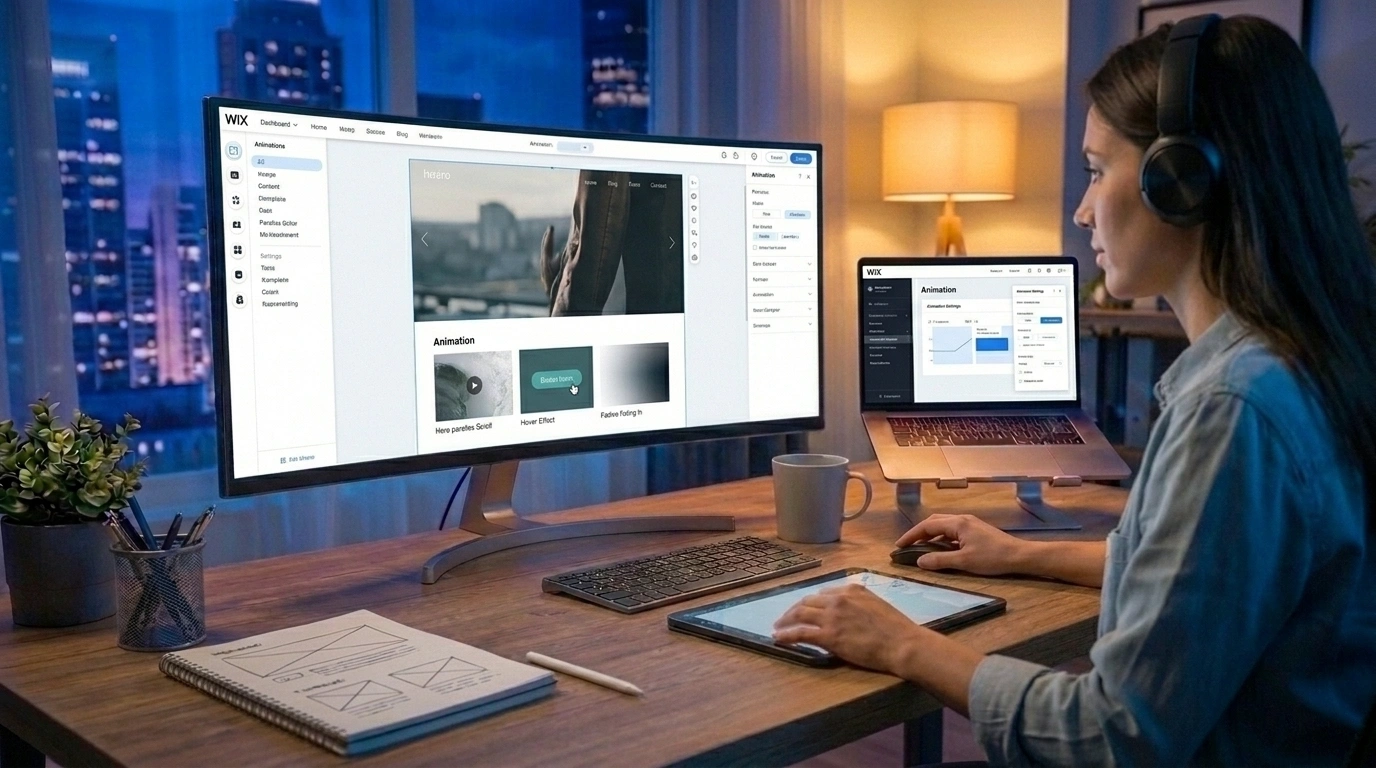





User testing matters because it shows you how real people actually use your website or app, not how you assume they do. By watching users complete tasks, you can spot confusing menus, slow pages, and broken steps before they cost you customers. The result? Higher conversions, happier visitors, and a stronger online presence.
Have you ever launched a website you were proud of, only to watch visitors leave without buying anything? It happens more often than you'd think! The problem usually isn't your product. It's the experience. And the only way to truly understand that experience is through user testing.
User testing is the process of watching real people interact with your website, app, or software. Instead of guessing what works, you get to see exactly where users get stuck, what makes them smile, and what makes them click away. It's honest, eye-opening, and one of the smartest investments you can make in your digital presence.
In this guide, we'll walk through what user testing is, why it matters so much, and how it directly affects your conversions, design quality, and even your search rankings. You'll also learn the main types of user testing and how to get started. Let's dive in!
What Is User Testing and Why Should You Care?
User testing is a method of evaluating your product by observing real users as they try to complete specific tasks. Think of tasks like "find a product and add it to your cart" or "sign up for the newsletter." As users work through these steps, you watch where they hesitate, struggle, or give up.
Why should you care? Because what makes sense to you might confuse your visitors completely. You built the site, so you know exactly where everything is. Your customers don't have that advantage.
Here's a sobering reality: research shows it takes users about 50 milliseconds (that's 0.05 seconds!) to form an opinion about your website, according to a study published in Behaviour & Information Technology. That's faster than a blink. User testing helps you make sure that split-second impression is a good one.
When you run user testing regularly, you get to:
- See your website through your customers' eyes
- Find problems before they drive people away
- Make decisions based on real behavior, not guesswork
- Build products people genuinely enjoy using
The Real Cost of Skipping User Testing
Skipping user testing might feel like saving time and money. In reality, it often costs you far more down the road. When visitors get frustrated, they don't usually complain. They simply leave and rarely come back.
The numbers tell a powerful story:
- 52% of customers have stopped buying from a brand after a single bad experience, according to a 2025 PwC customer experience survey.
- 70% of consumers will abandon a brand after just two bad experiences (Emplifi).
- 88% of users are less likely to return to a website after a poor user experience (Toptal).
- 75% of users judge a company's credibility based on its website design, according to research from Stanford University.
Here's the part that surprises many business owners: nearly half of all companies don't do this at all. A report from Econsultancy found that 45% of companies do not conduct any form of UX testing. That's a huge missed opportunity, and also a chance for you to get ahead of competitors who are still guessing.
Every confusing button, slow-loading page, or hidden checkout step quietly chips away at your revenue. User testing helps you find and fix these leaks before they drain your sales.
How User Testing Improves Your UI/UX Design
Great design isn't about looking pretty. It's about helping people do what they came to do, quickly and easily. User testing is the bridge between a design that looks good and a design that actually works.
When you watch real users navigate your site, patterns appear fast. Maybe everyone misses your main call-to-action button. Maybe your menu labels confuse people. Maybe a form feels too long, so visitors abandon it halfway. These are the kinds of insights you simply can't get from staring at your own design.
This matters more than ever because 94% of consumers say easy navigation is the most important feature in a digital platform, according to Clutch. If people can't find what they need, the prettiest design in the world won't save you.
A strong UI/UX design process should always include testing. At Razen Creations LLC, our UI/UX Design and Web Design & Development teams use real user feedback to refine layouts, simplify navigation, and remove friction. The goal is simple: make every visit smooth, clear, and enjoyable.
User Testing and Its Impact on Conversions
Want to know the most exciting part? User testing has a direct, measurable effect on your bottom line. When you remove friction, more visitors turn into paying customers.
The data here is genuinely impressive:
- A well-designed user interface can increase a website's conversion rate by up to 200%, and a better overall UX design can boost conversions by up to 400%, according to Forrester.
- Every $1 invested in UX design can return up to $100, an ROI of about 9,900% (Forrester).
- Pages that load in one second see conversion rates up to 2.5 times higher than pages that take five seconds, based on Portent's analysis of over 100 million pageviews.
- Organizations that invest in continuous UX testing can improve revenue retention by up to 10.8% over three years (Forrester).
Speed, clarity, and ease all come together here. User testing reveals which of these areas are holding you back, so you can fix the right things instead of guessing. When you make changes based on real behavior, your conversions climb and your marketing budget works much harder.
Types of User Testing Every Business Should Know
Not all user testing looks the same. Different methods answer different questions. Here are the main types you should know:
1. Usability testing. This is the classic approach. You give users specific tasks and watch how easily they complete them. It's perfect for spotting confusing flows and broken steps.
2. A/B testing. Here you compare two versions of a page to see which performs better. For example, a green button versus a red one, or one headline against another. It's data-driven and great for fine-tuning.
3. Moderated testing. A facilitator guides the user through tasks in real time and asks questions along the way. This gives you rich, detailed insights into what people are thinking.
4. Unmoderated testing. Users complete tasks on their own, often using a tool that records their screen. It's faster and cheaper, and great for gathering feedback at scale.
5. Remote user testing. Participants take part from their own homes and devices. This often gives you more natural behavior, since people use the same setup they'd use in real life.
6. First-click testing. This checks where users click first when trying to complete a task. If that first click is wrong, the rest of the journey usually goes downhill.
You don't need to use every method. The right mix depends on your goals, your budget, and the questions you're trying to answer.
How to Conduct User Testing for Your Website or App
Ready to give it a try? You don't need a huge budget or a fancy lab to get started. Here's a simple, practical process you can follow:
- Set clear goals. Decide what you want to learn. Are people struggling at checkout? Can they find your contact page? Pick one or two questions to focus on.
- Define key tasks. Create realistic tasks for users to complete, like "buy a product" or "book a consultation."
- Choose your testers. Aim for people who match your target audience. Even five users can reveal most of your major problems.
- Watch and listen. Observe quietly. Ask users to think out loud so you can hear their reasoning. Resist the urge to help!
- Take notes on patterns. One person struggling might be chance. Three people struggling at the same spot is a clear sign.
- Make changes and test again. User testing works best as an ongoing habit, not a one-time event.
This is where many busy business owners feel stuck. Running tests, analyzing results, and fixing issues takes time and skill. That's exactly where a trusted partner makes all the difference.
How Razen Creations LLC Helps With Website Audit and Testing
If all of this feels like a lot to handle on your own, don't worry. We've got you covered! At Razen Creations LLC, we help businesses turn confusing, underperforming websites into smooth, high-converting experiences.
Our Website Audit & Testing service takes the guesswork out of the process. We dig into how real users interact with your site, find the spots where you're losing visitors, and give you clear, practical recommendations to fix them.
But we don't stop at testing. Razen Creations LLC offers a full range of services to help your business grow online:
- Web Design & Development to build fast, beautiful, user-friendly websites
- Custom Software Development to streamline and automate your operations
- Mobile App Development to reach customers wherever they are
- UI/UX Design rooted in real user behavior
- Digital Marketing including SEO, PPC, and social media to drive traffic
- eBook Publishing to help you share your expertise and build authority
The best part? Everything connects. A site that's been properly tested converts better, ranks higher, and supports every other marketing effort you make. Get a free consultation and let our team show you what's possible.
The Connection Between User Testing and SEO
Here's something many people miss: user testing doesn't just help your visitors. It also helps your search rankings. Google pays close attention to how people experience your site.
Google's Core Web Vitals, which measure things like loading speed and visual stability, are confirmed ranking factors. When user testing helps you fix slow pages and clunky layouts, you improve those scores directly. Better scores can mean better rankings.
Beyond the technical side, user behavior sends signals too. When visitors stay longer, click around, and complete actions, it tells search engines your page is valuable. When they bounce away in seconds, it suggests the opposite. User testing helps you create the kind of experience that keeps people engaged.
So the cycle works like this:
- User testing improves your design and speed
- Better design and speed improve user behavior signals and Core Web Vitals
- Those improvements support higher search rankings
- Higher rankings bring more traffic, and good design converts that traffic into customers
This is why our SEO Services and Website Audit & Testing work so well together. They feed each other. You can learn more about page experience signals directly from Google's own guidance.
Real Business Use Cases and Scenarios
Let's make this concrete with a few real-world examples.
Scenario 1: The online store losing sales at checkout. An e-commerce business notices lots of abandoned carts. User testing reveals that the checkout form asks for too much information upfront. After simplifying it, more shoppers complete their purchases. Small fix, big payoff.
Scenario 2: The service business with a confusing homepage. A consulting firm gets plenty of traffic but few inquiries. Testing shows that visitors can't find the "Book a Consultation" button. Once it's made bold and obvious, inquiries jump.
Scenario 3: The mobile app with poor reviews. An app developer keeps getting low ratings. User testing uncovers a frustrating sign-up step where many users get stuck. Fixing that one screen leads to happier users and better reviews.
In every case, the lesson is the same. The business didn't need to start over. It just needed to listen to its users and fix the right things. That's the quiet power of user testing.
Start Testing, Start Growing
User testing isn't a luxury reserved for big companies. It's a practical, affordable way for any business to stop guessing and start growing. By watching how real people use your site or app, you can fix what's broken, boost your conversions, climb the search rankings, and build a digital presence you're genuinely proud of.
The companies winning online today aren't the ones with the biggest budgets. They're the ones who truly understand their users. You can be one of them!
Ready to see what your visitors really experience? Work with Razen Creations LLC and let our team uncover the hidden issues holding your business back. Contact our team today for a free consultation and take the first step toward a smarter, stronger website.
Frequently Asked Questions About User Testing
What is user testing in simple terms?
User testing is watching real people use your website, app, or software to see how easily they can complete tasks. It helps you find problems and improve the experience based on real behavior instead of guesses.
How much does user testing cost?
Costs vary widely based on the method and scale. Basic user testing can be very affordable, especially with just five participants. Larger or ongoing programs cost more, but the return is high since better UX can increase conversions significantly. A custom Website Audit & Testing plan from Razen Creations LLC can be tailored to your budget.
How many users do I need for user testing?
You don't need a crowd. Testing with just five users typically reveals most of the major usability problems on a site. You can always run more rounds as you make improvements.
Does user testing help with SEO?
Yes. User testing helps you improve site speed and ease of use, which boosts Google's Core Web Vitals and encourages positive user behavior signals. Both of these support higher search rankings.
What's the difference between user testing and A/B testing?
User testing observes how people use your site and why they behave a certain way. A/B testing compares two versions of a page to see which one performs better with real traffic. Both are valuable and often used together.
How often should I run user testing?
User testing works best as an ongoing habit. Run it whenever you launch something new, redesign a page, or notice a drop in performance. Continuous testing leads to steady, compounding improvements over time.
Can Razen Creations LLC handle user testing for me?
Absolutely! Our Website Audit & Testing service covers the entire process, from running tests to delivering clear, actionable recommendations. We also offer web design, custom software, mobile app development, UI/UX design, and digital marketing to help your business grow.